
Le pani puri est extrêmement populaire en Inde.
Le processus de fabrication industrielle du pani puri fait appel à une extrudeuse de cuisson et à une extrudeuse de pétrissage, ainsi qu'à un processus de séchage rigoureux.
Les procédés d'extrusion et de séchage, ainsi que les matières premières, déterminent ensemble la qualité du pani puri.
Nous allons maintenant nous concentrer principalement sur la matière première principale.
L'ingrédient clé qui permet aux boulettes de pani puri de gonfler n'est pas un additif chimique particulier, mais bien un type spécifique de farine et l'humidité emprisonnée à l'intérieur de la boulette.
Vous trouverez ci-dessous une explication scientifique détaillée ainsi que le processus de fabrication :
I. Ingrédients principaux
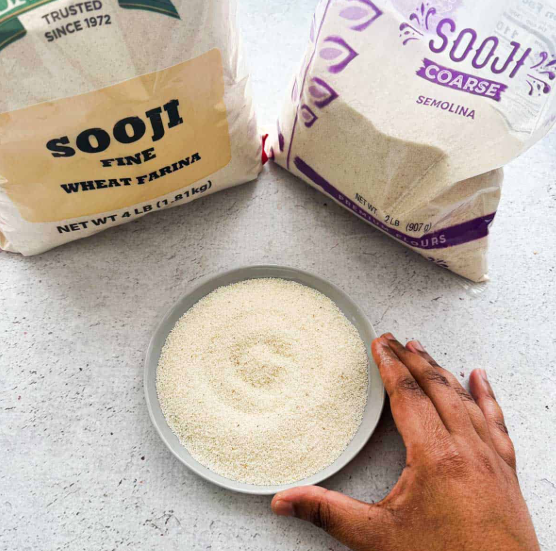
1) Sooji/Rava (semoule) :
C'est l'ingrédient le plus essentiel.
Le sooji est une farine grossière obtenue à partir de blé dur et pauvre en gluten.
En raison de sa faible teneur en gluten, la pâte s'étirera moins facilement.
Une faible teneur en gluten signifie que la pâte s'étirera moins facilement et que l'enveloppe des boulettes ne deviendra pas dure et compacte à la friture.
2) Farine blanche (maida) ou farine de blé complet (atta) :
On ajoute généralement au sooji/rava une petite quantité de farine blanche afin d'augmenter sa teneur en gluten.
Cela permet aux boulettes de pani puri de mieux résister à la rupture lors de l'extrusion.
Cependant, la farine ordinaire n'apportera pas grand-chose, sinon les boulettes de pani puri ne gonfleront pas.
II. Recette à titre indicatif
[fusion_table fusion_table_type=”1” fusion_table_rows=”” fusion_table_columns=”” awb-switch-editor-focus=”” margin_top=”” margin_right=”” margin_bottom=”” margin_left=”” hide_on_mobile=”small-visibility,medium-visibility,large-visibility” class=”” id=”” animation_type=”” animation_direction=”left” animation_color=”” hue=”” saturation=”” lightness=”” alpha=”” animation_speed=”0.3” animation_delay=”0" animation_offset=""]
| Ingrédients | Raito | Fonction |
| Semoule (ingrédient principal) | 60% – 80% | Il présente une faible teneur en gluten et garantit un bon gonflement. |
| Amidon de tapioca (ingrédient auxiliaire essentiel) | 10% – 20% | Améliore le gonflement, ce qui donne une texture plus croustillante, plus légère et qui fond davantage dans la bouche. |
| Fécule de pomme de terre | 5% – 15% | Contribue à donner du volume au produit, tout en lui conférant une texture légère. |
| Eau | 25-35% | Prépare la pâte.
La quantité d'eau est déterminante et doit être contrôlée avec précision. On utilise généralement de l'eau froide. |
| Huile végétale comestible | Montant approprié | Améliore l'extensibilité de la pâte, ce qui facilite son étalement à la machine, empêche qu'elle ne colle et améliore légèrement son croustillant. |
| Sel | Montant approprié | Assaisonnement |
| Émulsifiant | Montant approprié | Des agents améliorants, tels que les mono- et diglycérides d'acides gras, sont utilisés pour réduire la tension superficielle de la pâte et obtenir une répartition plus homogène des molécules d'eau, ce qui permet de stabiliser le processus de gonflement et de réduire les défauts du produit. |
| Émulsifiant | Montant approprié | L'acide citrique, par exemple, sert à ajuster le pH de la pâte, à améliorer sa stabilité et à empêcher sa décoloration pendant la friture. |
[/fusion_table]
Remarque : Les proportions indiquées ci-dessus ne sont données qu'à titre d'exemple. La formule de fabrication réelle est strictement confidentielle, et chaque fabricant mène des essais approfondis afin de déterminer la proportion optimale. Le type et la proportion d'amidon sont essentiels pour ajuster la texture du produit final (croustillant et fermeté).
III. La science de la bouffée (“ expansion de la vapeur ”)
Ce processus s'apparente au gonflage d'un ballon :
I. Encapsulation de l'humidité :
Lors de la fabrication des boulettes de pani puri, une faible quantité d'humidité s'y retrouve naturellement piégée.
II. Friture à haute température :
Lorsque les boulettes de pani puri froides sont plongées dans l'huile chaude, leur enveloppe extérieure se réchauffe d'abord et durcit rapidement, formant ainsi une coque hermétique.
III. Vaporisation de l'eau :
L'humidité emprisonnée à l'intérieur des granulés est rapidement chauffée, se transformant ainsi en vapeur d'eau.
Le volume du gaz augmente considérablement (l'eau multiplie son volume par 1 700 lorsqu'elle se transforme en vapeur !).
IV. Expansion sous pression :
L'immense pression de la vapeur n'ayant nulle part où aller, elle est contrainte de pousser l'enveloppe de la pastille vers l'extérieur.
V. Cadre :
Presque simultanément, la pâte à puri est rapidement frite dans de l'huile très chaude jusqu'à ce qu'elle devienne croustillante, formant ainsi les boulettes rondes et creuses que l'on voit.
Une fois que l'humidité interne s'est complètement évaporée, le puri cesse de gonfler et devient léger, croustillant et creux.
| Lien | |
| Plus d'informations | Pourquoi le soojî/rava est-il si important pour le pani puri ? |
| Plus d'informations | Extrudeuse et chaîne de production de pani puri |
