
Dans la fabrication d'aliments soufflés, l'extrudeuse est l'équipement central, et ses performances déterminent directement le goût, la forme et le rendement de production des produits. En tant que deux types de machines dominants, les extrudeuses monovis et les extrudeuses bivis présentent des différences significatives en termes de scénarios d'application et de résultats de transformation, en raison de leurs conceptions structurelles différentes. Ci-dessous, nous présentons tout d'abord les caractéristiques de base de ces deux types d'extrudeuses, puis nous comparons leurs différences à partir de critères clés.
I. Présentation générale des deux types d'extrudeuses
(1) Extrudeuse monovis
L'extrudeuse monovis est l'équipement d'extrusion le plus simple et le plus répandu ; elle se compose d'une vis d'Archimède centrale et d'un cylindre de chauffage. Elle repose principalement sur la rotation unidirectionnelle de la vis, combinée au chauffage externe du cylindre, pour mener à bien l'ensemble du processus de transport, de compression, de plastification par fusion et d'extrusion-expansion de la matière. Sa vis est généralement divisée en une section de transport, une section de compression et une section de dosage. Une fois que la matière entre par l’orifice d’alimentation, elle est poussée vers l’avant sous l’effet de la traînée de frottement générée par la rotation de la vis, atteint un état fondu grâce au chauffage et au cisaillement, puis est finalement extrudée et mise en forme à travers la filière pour obtenir l’effet de soufflage. Cet équipement présente une structure simple et est facile à fabriquer, ce qui en fait un choix courant pour la production d’entrée de gamme d’aliments soufflés ; il est particulièrement adapté au traitement simple par soufflage de matières premières uniques.

Extrudeuse monovis
(2) Extrudeuse à double vis
L'extrudeuse à double vis est un équipement à haut rendement développé à partir de l'extrudeuse à vis unique. Elle se compose d'un noyau formé de deux vis parallèles ou coniques s'engrenant l'une dans l'autre, ainsi que d'un cylindre présentant une section transversale en forme de “ ∞ ”. En fonction du mode d’engrènement des vis et du sens de rotation, on distingue l’engrènement co-rotatif, l’engrènement contre-rotatif et d’autres types, parmi lesquels le modèle autonettoyant à engrènement serré est le plus couramment utilisé dans la production d’aliments soufflés. Son principe de fonctionnement repose sur la rotation coordonnée des deux vis pour assurer un transport par déplacement positif des matières premières. Grâce au chauffage du cylindre et au cisaillement des vis, les matières premières peuvent être mélangées, fondues et soufflées de manière homogène en peu de temps. Parallèlement, les vis engrenées peuvent se racler mutuellement, ce qui leur confère une fonction d’autonettoyage permettant d’éviter l’accumulation de matière et la carbonisation. Cet équipement offre une grande précision de traitement et des fonctionnalités complètes, ce qui le rend adapté à la production d’aliments soufflés aux formules complexes et de haute qualité.
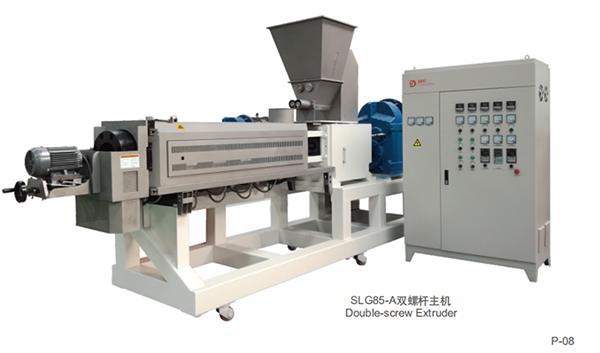
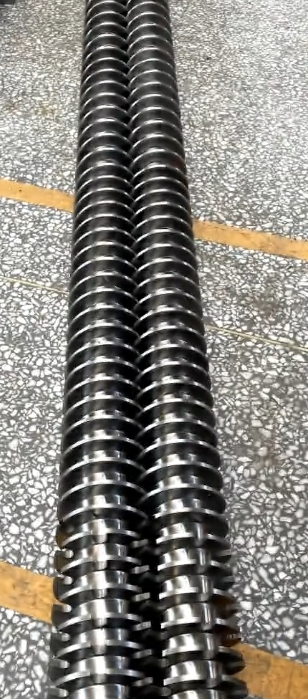
Extrudeuse à double vis
II. Principales différences entre les extrudeuses à double vis et celles à vis unique
1. Différences de structure et de mécanisme de transport
L'extrudeuse monovis ne comporte qu'une seule vis et utilise un système de transport par frottement. L'efficacité du transport des matériaux dépend des propriétés de frottement entre ceux-ci et la vis ainsi que le cylindre. Si le matériau présente un faible coefficient de frottement, il est susceptible de provoquer des blocages au niveau de l'alimentation. L'extrudeuse à double vis est équipée de deux vis engrenées et utilise un transport par déplacement positif, ce qui lui confère une capacité de transport plus stable, ne subit pas l'influence des propriétés de frottement des matériaux et permet d'éviter efficacement les irrégularités d'alimentation. De plus, les vis sont généralement de conception modulaire, ce qui permet d'ajuster les paramètres de traitement avec souplesse.
2. Différences au niveau des effets de malaxage et de plastification
L'extrudeuse monovis présente une faible capacité de mélange, reposant principalement sur l'effet d'agitation généré par la rainure de la vis. L'uniformité du mélange des matières et l'effet de plastification sont moyens ; elle convient au soufflage de matières premières simples (telles que l'amidon de maïs pur), mais peine à traiter les formules à plusieurs composants et à forte teneur en charges. La zone d’engrènement de l’extrudeuse à double vis peut générer de puissants effets de cisaillement et d’étirement, avec d’excellents résultats en termes de mélange et de dispersion. Elle permet d’obtenir un mélange homogène de diverses matières premières (telles que l’amidon, les céréales, les additifs), une efficacité de plastification élevée, et rend le goût des aliments soufflés plus homogène et leur qualité plus stable.
3. Différences en matière d'adaptabilité des matériaux
L'extrudeuse monovis présente une adaptabilité limitée aux matières premières ; elle convient principalement à la transformation de matières premières simples présentant une bonne fluidité et une sensibilité thermique modérée. Elle offre de mauvais résultats de transformation pour les matières à forte teneur en charges, à composants multiples ou thermosensibles, et est sujette à la combustion de la matière et à un soufflage irrégulier. L'extrudeuse à double vis présente une adaptabilité plus large aux matières premières ; elle peut traiter des matières en poudre, des matières à forte teneur en charge et des matières thermosensibles (telles que les aliments soufflés enrichis en poudre de fruits et légumes et en protéines). De plus, le temps de séjour des matières est court et le contrôle de la température est précis, ce qui permet de préserver efficacement les composants nutritionnels des matières et de réduire les phénomènes de brûlure.
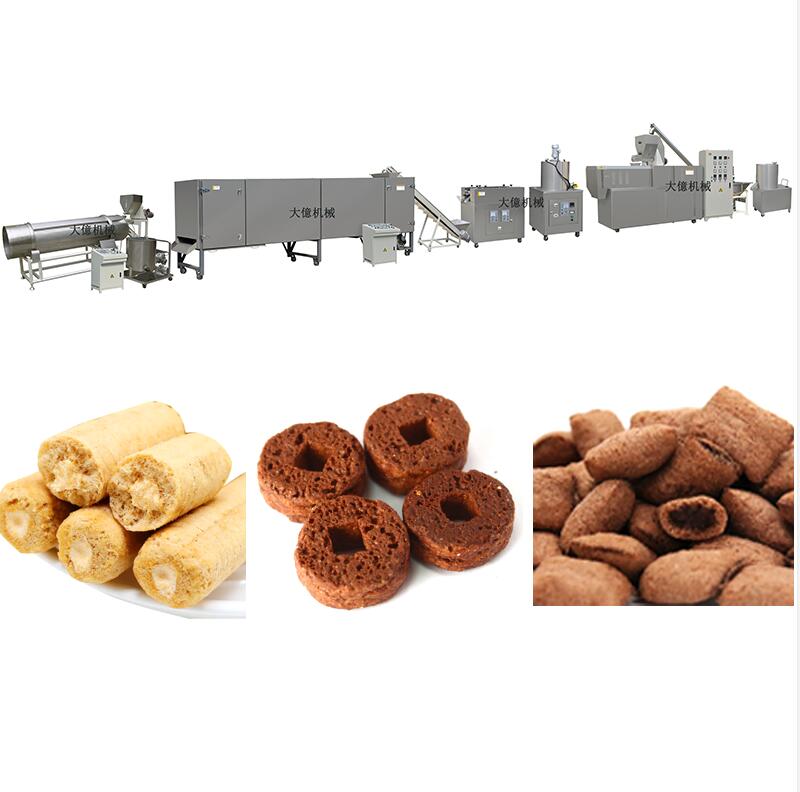
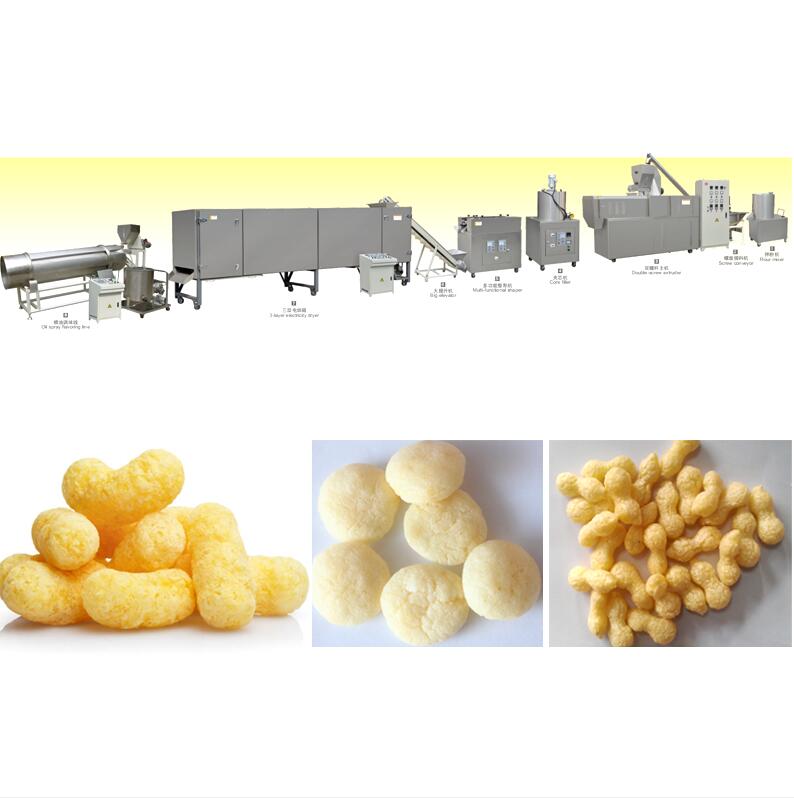

4. Différences en matière d'efficacité et de stabilité de la production
L'extrudeuse monovis présente une faible vitesse et un rendement de production relativement faible ; de plus, la pression d'extrusion est sujette à des fluctuations, ce qui entraîne des caractéristiques techniques irrégulières du produit. Elle convient donc à la production en petites et moyennes séries de produits simples. L'extrudeuse à double vis présente une vitesse plus élevée (jusqu'à 300-600 tr/min), un couple spécifique important, et son rendement de production est bien supérieur à celui de l'extrudeuse monovis. De plus, la pression d’extrusion est stable et ne présente pas de fluctuations pulsatoires, ce qui permet une production continue à grande échelle et garantit la cohérence des caractéristiques techniques des produits.
[fusion_youtube admin_label=”” id=”https://www.youtube.com/watch?v=QOwG3_FZ1w8&list=PL1nuKUd5BkxKxN-b2cVfSPzzsMtPThFz2&index=3″ alignment=”center” width=”1200″ height=”600″ start_time=”” end_time=” ” autoplay=” false ” mute=” false ” loop=” false ” controls=” true ” api_params=” ” title_attribute=” ” video_facade=” ” thumbnail_size=” auto ” video_facade_no_cookie=” on ” margin_top=” ” margin_bottom=” ” hide_on_mobile=” small-visibility,medium-visibility,large-visibility ” class=” ” css_id=”” render_logics=”” structured_data=”off” video_upload_date=”” video_upload_date_timezone=”-12:00” video_duration=”” video_title=”” video_desc=”"][/fusion_youtube]
5. Différences en termes de coût et de difficulté d'entretien
L'extrudeuse monovis présente une structure simple et un procédé de fabrication éprouvé ; elle se caractérise par un faible coût d'acquisition et d'entretien, ainsi que par une grande facilité d'utilisation, ce qui la rend adaptée aux entreprises disposant de moyens financiers limités et d'une petite échelle de production. L'extrudeuse à double vis présente une structure complexe et des exigences élevées en matière de précision de traitement ; son coût d'acquisition et d'entretien est élevé, et son fonctionnement et son entretien nécessitent du personnel qualifié. Elle permet toutefois de répondre aux besoins d'une production de grande envergure et de haute qualité, et s'avère plus rentable à long terme.
6. Différences de température et de pression dans le fût
Étant donné que le transport de la matière dans l'extrudeuse monovis repose sur le frottement, la répartition de la température dans le cylindre est relativement inégale : la température est plus basse près de l'orifice d'alimentation et plus élevée à l'extrémité de décharge, ce qui entraîne un écart de température global important. De plus, la pression d’extrusion est sujette à des fluctuations dues aux variations du frottement de la matière, ce qui se traduit par une mauvaise stabilité de la pression. L’extrudeuse à double vis utilise un transport par déplacement positif, avec un cisaillement uniforme de la matière. La température du cylindre peut être contrôlée avec précision par sections, avec de faibles écarts de température, ce qui permet d’éviter toute surchauffe locale. Parallèlement, la pression d’extrusion est stable et sans pulsations, et sa valeur globale est supérieure à celle de l’extrudeuse monovis, ce qui permet de mieux répondre aux exigences de mise en forme des aliments soufflés de haute qualité et de réduire les problèmes tels que la déformation du produit ou un soufflage insuffisant.
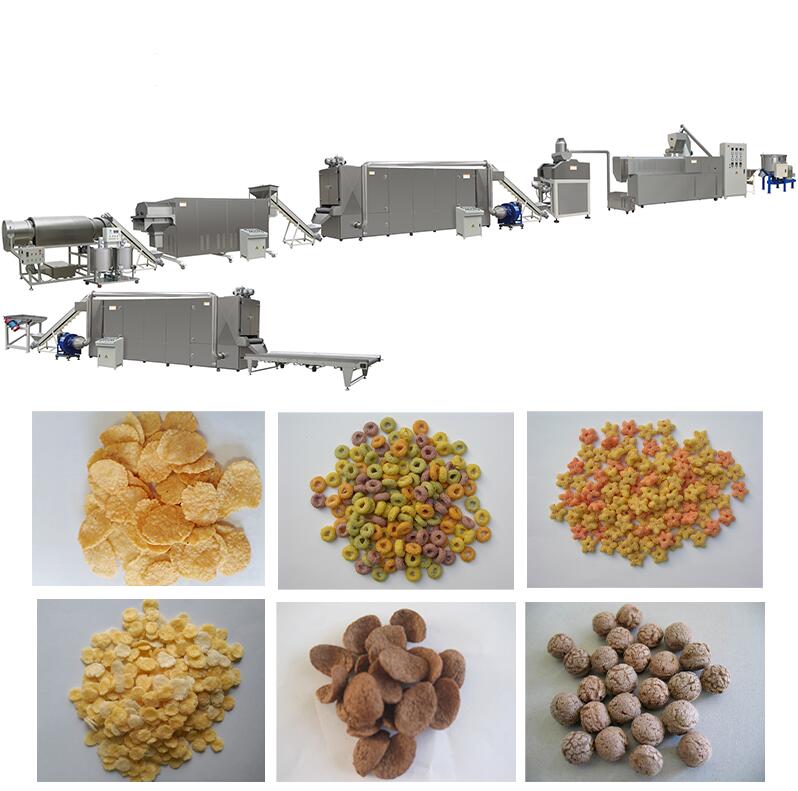
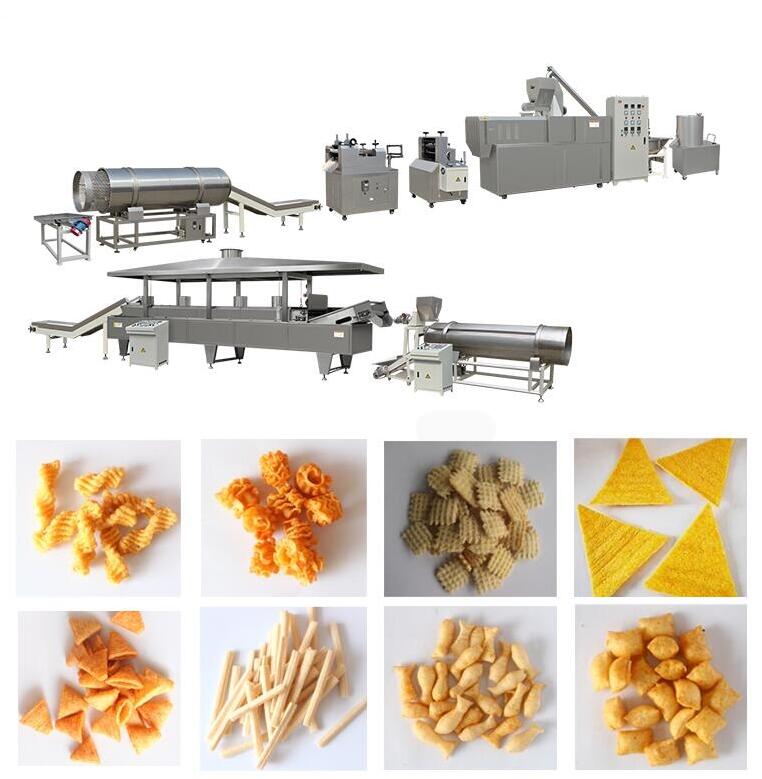
En résumé, l'extrudeuse monovis est adaptée à la production d'aliments soufflés d'entrée de gamme, en petits lots et à partir d'une seule matière première, et présente les avantages d'un faible coût et d'un fonctionnement simple ; l'extrudeuse à double vis est adaptée à la production à grande échelle, de haute qualité et de formulations complexes, et se caractérise par un bon mélange, un rendement élevé et une grande adaptabilité. Les entreprises peuvent choisir l'extrudeuse appropriée en fonction de leur propre échelle de production, du positionnement de leurs produits et de leur budget afin d'optimiser leur rendement de production.
Savez-vous quels sont les produits qui nécessitent à la fois des extrudeuses monovis et des extrudeuses bivis ?
Écrit par Lily Ding
WhatsApp :+8613573122583
E-mail :[email protected]