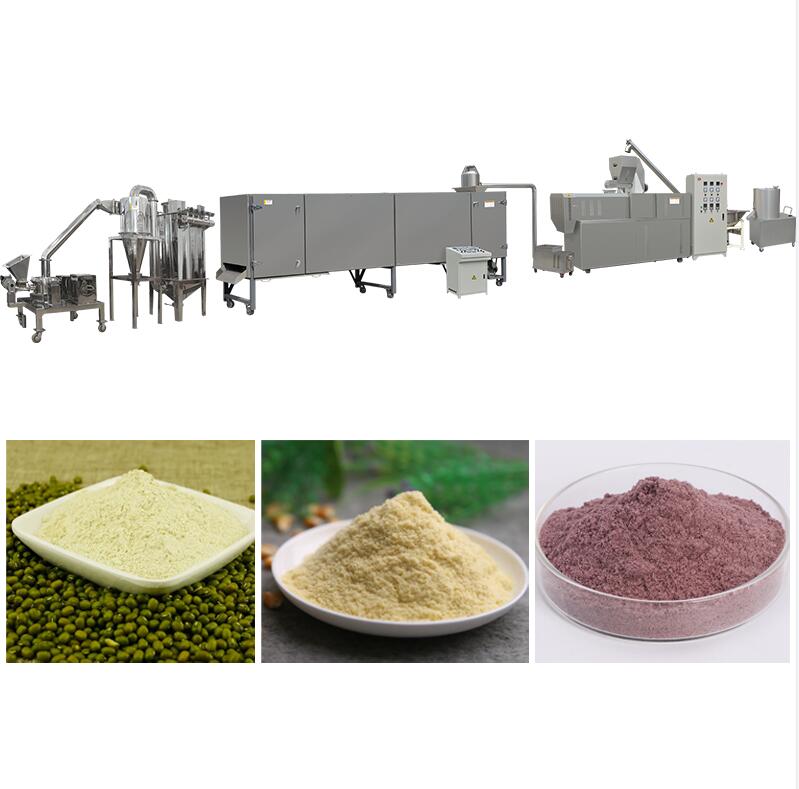
How are fried peas made?
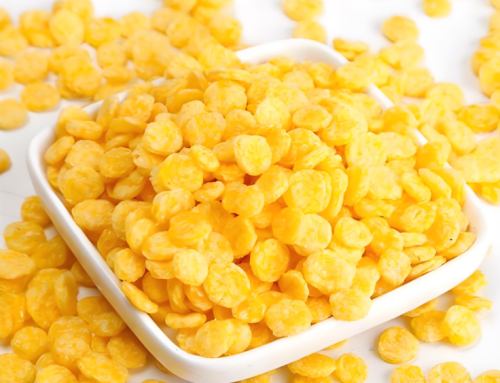
High-quality green peas are produced via an automated assembly line process consisting of “soaking → shaping → low-temperature frying → oil removal → seasoning/coating → cooling & packaging.” The core of this process lies in the “coating + segmented temperature-controlled frying” stages, as well as rigorous raw material selection and quality control.
The following description outlines the process according to actual factory workflow (combining publicly available data and industry-standard techniques to closely mirror a real production line):
- Raw Materials: Specialized Green Peas
- Variety: Green-skinned, round-grain dried green peas (these are *not* fresh peas, but rather sun-dried ones).
- Requirements: Plump grains, uniform size, vibrant green color, free from mold and insect infestation, and a moisture content of ≤13%.
- Initial Factory Screening: Air separation to remove dust, vibration screening for size grading, and manual sorting to remove defective peas.
- Cleaning + Soaking (The Critical First Step)
1.High-pressure spray washing to remove surface dust and impurities.
2.Transferred into large soaking tanks for immersion in clean water at ambient temperature:
- Duration: 8–12 hours (longer in winter, shorter in summer).
- Objective: Ensure the peas fully absorb water, leaving no hard core in the center, with a final moisture content of approximately 45%–50%.
- Function: Guarantees that the peas are crispy both inside and out after frying—preventing them from being undercooked in the center or cracking excessively.
3.Vibration draining after soaking: Ensures there is no free water remaining on the surface; otherwise, this would cause oil splashing and clumping during the frying stage.
III. Shaping / Pre-processing (Key Feature)
There are two main approaches in the industry:
- Traditional: Direct deep-frying → Prone to bursting, large cracks, and peeling skin.
- High-end: Initial light steaming / thermal setting (not cooked through) → Tightened skin, less prone to bursting during frying, and a more uniform, rounded shape.
Publicly available information mentions a combined steaming-and-frying process, the objectives of which are:
- Color Preservation: Achieving a more vibrant, emerald-green hue.
- Shape Retention: Minimizing bursting and bean breakage.
- Texture Preservation: Ensuring a consistent crispness both inside and out.
- Multi-Stage Frying (Core Secret: Temperature + Time Control)
Utilizing a continuous, automated fryer—rather than batch frying in a single pot:
1.Stage 1 (Low-Temperature Dehydration):
- Oil Temperature: 135–145°C
- Duration: 7–10 minutes
- Condition: Beans float to the surface, turn slightly yellow, the skin sets, and most of the moisture is removed.
2.Stage 2 (High-Temperature Crisp-Setting):
- Oil Temperature: 160–165°C
- Duration: 2–3 minutes
- Condition: Golden-yellow with vibrant green highlights, uniform cracking, crispy texture without scorching.
- Strict Control: Do not exceed 170°C to prevent discoloration, bitterness, and the formation of harmful substances.
Frying Oil: High smoke-point palm oil / refined rapeseed oil; continuously filtered, replaced periodically, and monitored for acid value.
- Centrifugal Oil Removal (Determines Greasiness)
Immediately after frying, the beans are transferred to a high-speed centrifugal oil extractor:
- Rotation Speed: 300–500 rpm
- Duration: 3–5 minutes
- Target: Oil content controlled within the range of 18%–22%
- Result: Dry surface texture, non-greasy feel, and less prone to flavor deterioration during storage.
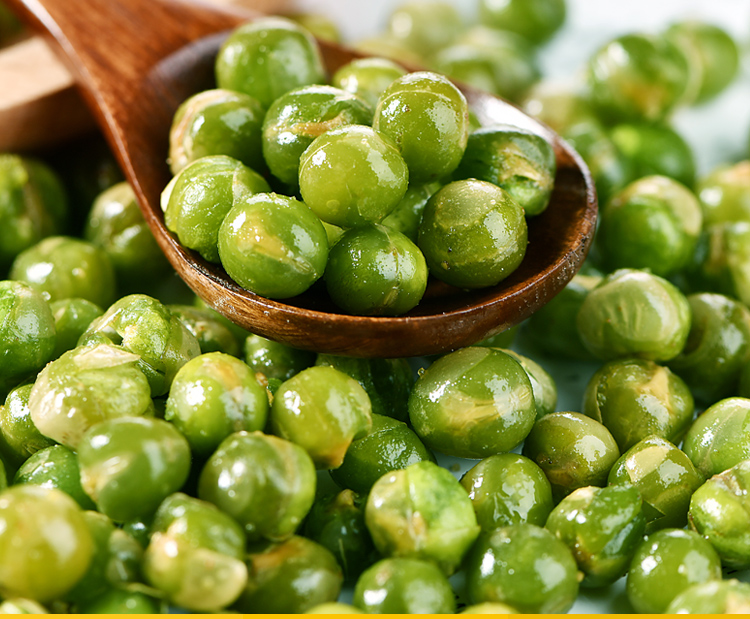
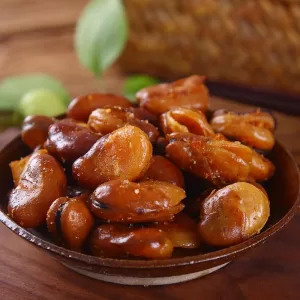
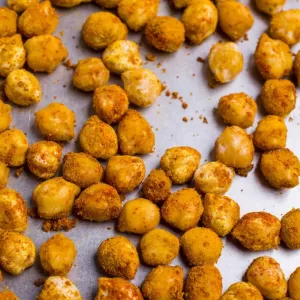
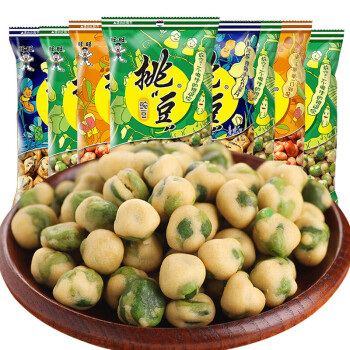
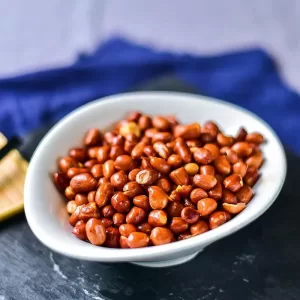
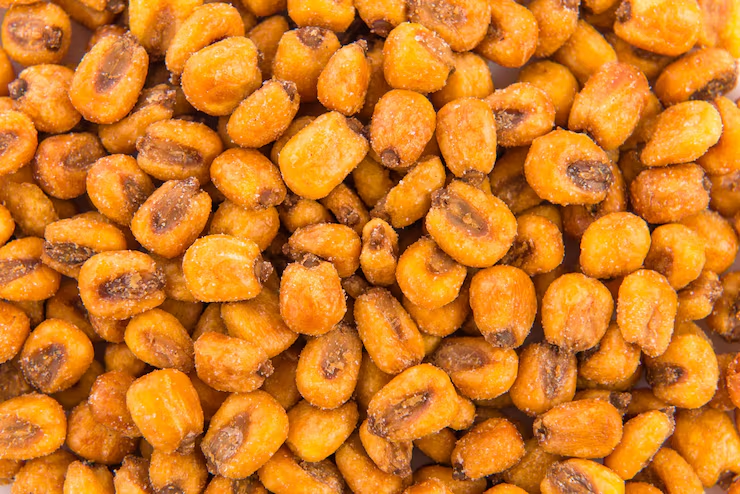
- Coating + Seasoning (Key to Flavor)
This constitutes the primary difference between high-end and standard fried peas: a thin layer of coating powder is applied first, followed by the seasoning.
- While still hot (60–80°C), transfer the product into a rotary coating drum:
- First, apply a very thin base layer of starch / flour + dextrin (to enhance crispness, aid flavor absorption, and prevent moisture re-absorption).
- Next, add the seasonings: salt, sugar, MSG, garlic powder / crab roe powder / beef powder, etc. (adjusted according to desired flavor profile).
2.Tumble in the drum for 5–8 minutes to ensure the powder and seasonings adhere evenly; then, let the product rest (steep) for 5 minutes to allow the flavors to fully infuse.
- Garlic Flavor: Salt + Sugar + MSG + Garlic Powder + a small amount of aromatic spices.
- Crab Roe Flavor: Salt + Sugar + MSG + Crab Roe Powder + Cornstarch.
- Original Flavor: Salt + a small amount of Sugar + MSG.
VII. Cooling + Sorting
- Air-Cooling Conveyor: Cool the product down to **≤30°C**. It is critical that the product cools completely; otherwise, it will lose its crispness and become soft after packaging.
- Color Sorting + Manual Inspection: Remove burnt pieces, broken beans, and discolored kernels to ensure that every single piece is uniform in appearance and visually appealing.
VIII. Metal Detection + Packaging
- Metal Detector: Scan for the presence of any metal fragments (a mandatory step for food safety compliance).
- Automatic Weighing and Nitrogen-Flushed Pouch Sealing (Note: This is *not* vacuum packaging; nitrogen flushing better preserves crispness, prevents oxidation, and protects against flavor degradation).
- Pack into outer cartons and transfer to storage; store in a cool, dry place.
- Key Differences from Ordinary Fried Peas (One-Sentence Summary)
- Ordinary: Dry Beans → Soaking → Direct Frying → Salt Sprinkling → Large cracks, fragile texture, prone to becoming soft, and limited flavor variety.
- Premium: Carefully Selected Beans → Soaking → Shaping → Multi-Stage Temperature-Controlled Frying → Oil Removal → Coating + Seasoning → Cooling & Nitrogen Flushing → Round and intact shape, vibrant green color, superior crispness, highly resistant to becoming soft, and a richer, more consistent flavor profile.
Written by Lily Ding
WhatsApp:+8613573122583
Correo electrónico:[email protected]