
What Can a Twin-Screw Extruder Make? A Product Guide
A twin-screw extruder is far more versatile than many people assume. While it is true that these machines are workhorses in the plastics industry for compounding and masterbatch production, their ability to handle viscous, sticky, high-moisture, and fibrous materials with precision has pushed them into food, pharmaceutical, and sustainable materials manufacturing. The key advantage lies in their intermeshing screws, which provide excellent mixing, conveying, and self-wiping action, along with modular designs that allow operators to reconfigure screw elements and barrel sections for entirely different products on the same machine .
Below is a breakdown of the major product categories that twin-screw extruders can produce, based on current industrial and research applications.
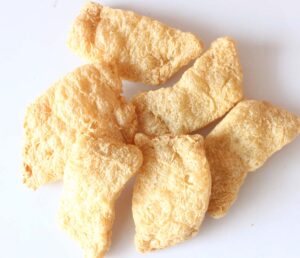
1. Texturized Proteins and Meat Analogues
Perhaps the most rapidly growing food application for twin-screw extrusion is the production of plant-based meat alternatives. High-moisture meat analogues (HMMA) and texturized vegetable proteins (TVP) rely on the extruder’s ability to align protein molecules under controlled heat and shear. A hygienic model of twin-screw extruder, with stainless steel product-contact parts, is typically recommended for these aqueous processes . Research has demonstrated that soy protein blends, distiller’s dried grains with solubles (DDGS), and other co-products can be successfully texturized into fibrous structures suitable for burger formulations and similar products . The extruder transforms powdered plant proteins into products with a chewy, meat-like texture without the need for traditional spinning or casting methods.
2. Puffed Snacks and Breakfast Cereals
Puffed snacks remain one of the most common food applications. Twin-screw extruders can process cereal flours, starches, and legume powders into puffed, crispy products through a combination of high shear, temperature, and sudden pressure release at the die. A notable trend is the incorporation of fruit and vegetable by-products—such as mango peel, passion fruit rind, pineapple pulp, and cocoa shell—into snack formulations. These high-fiber ingredients help improve nutritional profiles and reduce waste, though they require careful adjustment of moisture, screw speed, and temperature to achieve proper expansion . Coconut byproducts, including coconut flour and fiber, have also been successfully extruded into snacks and cereals, with twin-screw machines proving better suited than single-screw models for handling high-fat and high-fiber mixtures .

3. Textured and Modified Cereal Flours
Beyond finished snacks, twin-screw extruders are used to modify the functional properties of flours for use as ingredients. Extrusion can alter starch structure, improve cold-water swelling, and enhance resistance to aging. For example, Tanquan millet powder subjected to twin-screw extrusion at optimized conditions (around 115°C, 24% water addition) showed severely disrupted microstructure and improved cold-thickening ability, making it suitable for composite mixed-grain products . This “pre-gelatinized” or modified flour can then be used in instant porridges, soups, and bakery applications without requiring the end consumer to cook the raw grain.

4. Pasta and Gluten-Free Products
Twin-screw extrusion is increasingly used for pasta production, particularly for gluten-free formulations that lack the natural protein network of wheat. The extruder can cook the starch-protein matrix while shaping it through a die, producing pasta with acceptable texture and cooking quality. Coconut byproducts, for instance, have been evaluated as ingredients in extruded pasta, where their fiber and medium-chain triglycerides can improve nutritional value while the extruder’s controlled conditions preserve the product’s structural integrity .
5. Confectionery and Filled Products
While less frequently discussed in technical literature, twin-screw extruders are used in confectionery for continuous processing of chewing gum bases, licorice, and certain filled or layered products. The ability to inject liquids at multiple barrel ports and to handle highly viscous sugar or gum matrices makes extrusion an attractive alternative to batch cooking for certain confectionery applications.

6. Pharmaceutical and Nutraceutical Products
Twin-screw extrusion plays a significant role in pharmaceutical manufacturing, particularly for hot-melt extrusion (HME) and twin-screw granulation (TSG). In HME, an active pharmaceutical ingredient is dispersed in a polymer matrix at the molecular level, improving solubility and bioavailability for poorly water-soluble drugs . Twin-screw granulation is a continuous alternative to traditional high-shear batch granulation for producing uniform granules for tablets and capsules. The same principles apply to nutraceuticals, where sensitive bioactive compounds can be encapsulated or dispersed in protective matrices.
7. Sustainable and Bio-Based Materials
The plastics industry remains the largest user of twin-screw extruders, but the materials themselves are changing. These machines are now used to compound bio-based and biodegradable polymers, such as polylactic acid (PLA) and polyhydroxyalkanoates (PHA), with fillers, plasticizers, and other additives. They are also essential for incorporating natural fibers—wood flour, flax, hemp—into polymer matrices, a process that requires the extruder’s dispersive and distributive mixing capabilities to avoid fiber agglomeration and degradation . The same technology is applied to recycled plastics, where twin-screw extruders re-pelletize and compound post-consumer or post-industrial scrap into usable resin.
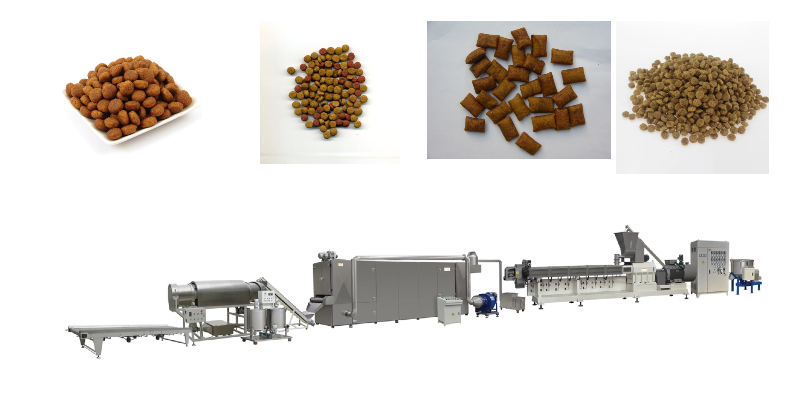
8. Pet Food and Animal Feed
Extrusion is the standard process for producing dry pet food kibble and many types of aquatic feed. The twin-screw design offers better control over cooking degree, starch gelatinization, and shape formation than single-screw machines, particularly for formulations with high meat or fat content. The ability to inject steam, water, and oils at different stages allows manufacturers to fine-tune density, durability, and nutritional retention
The range of products that can be made on a twin-screw extruder is remarkably broad, unified by a common need: precise control over mixing, heating, and shaping of complex formulations. Whether the goal is a crispy snack with added fiber, a meat-free burger with realistic texture, a soluble pharmaceutical formulation, or a recycled plastic compound, the twin-screw extruder provides a continuous, flexible, and scalable platform. As food scientists and materials engineers continue to explore new ingredients and sustainable feedstocks, the application space for this technology is likely to keep expanding.
If you are interested in extruder , you can contact me , my whatsapp number is 8615953166130