How to Dry Puffed Breakfast Cereal: A Comprehensive Guide
Drying is one of the most critical steps in the production of ready-to-eat (RTE) breakfast cereals. Following extrusion—where a cooked cereal dough is forced through a die to create shaped pieces—the product contains significant moisture that must be carefully removed to achieve the desired texture, crunch, bowl-life, and shelf stability. This article provides a comprehensive guide on how to dry extruded breakfast cereal, covering the key principles, equipment, parameters, and best practices.

Why Drying Matters
Freshly extruded cereal pieces typically have a moisture content ranging from 18% to 25% or higher. If left undried, the product would be soft, chewy, and prone to microbial spoilage. The drying process serves multiple essential functions:
Texture development: Proper drying creates the characteristic crispness and crunch that consumers expect.
Structural stabilization: Rapid drying “heat-sets” the expanded structure, preventing shrinkage and collapse.
Shelf stability: Reducing moisture to below 5–7% inhibits mold growth and enzymatic degradation.
Flavor enhancement: Toasting during drying develops desirable roasted and caramelized notes.
Pre-Drying Considerations
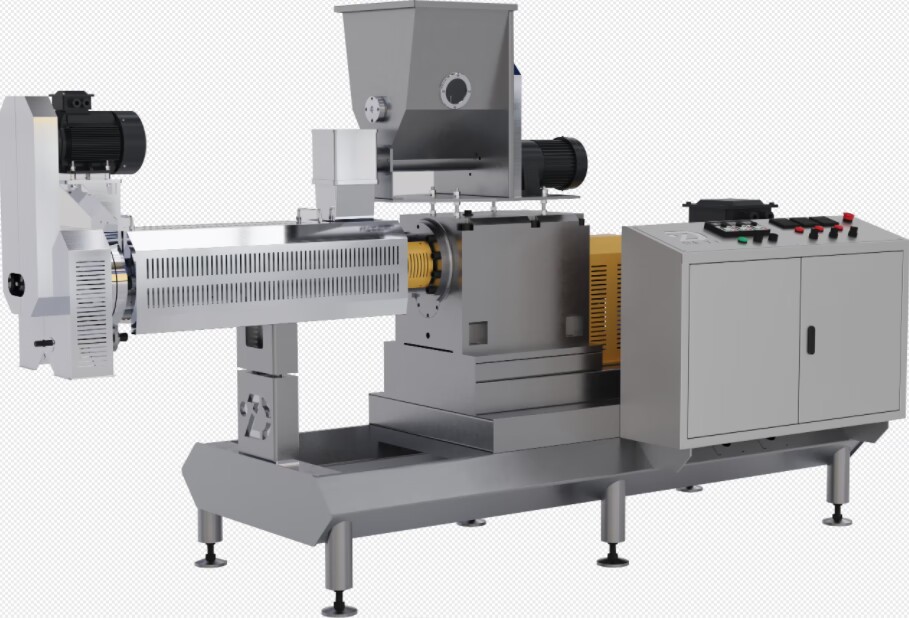
Before drying begins, the extruded cereal pieces should be cut to the desired size and shape. A rotary knife positioned at the extruder die face typically performs this cutting. For some products, an initial surface-drying step may be employed to render the pieces non-sticky before they enter the main dryer. This can be accomplished in a static dryer at approximately 78°C (172°F) for about 1.5 minutes.

Drying Equipment
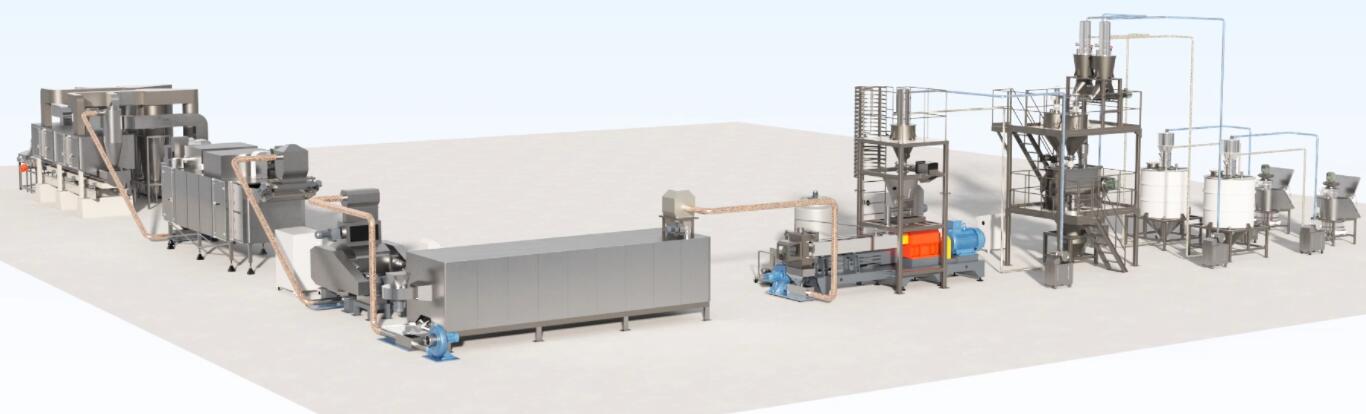
Several types of dryers are used in breakfast cereal manufacturing, each with distinct advantages:
Convection Tray Dryers
These are batch dryers where cereal pieces are spread on trays and exposed to heated, circulating air. They are suitable for small-scale production or as a preliminary drying step.
Belt Dryers (Continuous)
In continuous belt dryers, cereal pieces are conveyed through a heated chamber on a perforated belt. Hot air passes through the bed of product from above, below, or both. A typical industrial example is the two-pass belt dryer, which can operate with inlet air temperatures around 87.8°C and residence times of approximately 20 minutes.
Fluidized Bed Dryers
These dryers suspend the cereal pieces in a stream of hot air, providing excellent heat and mass transfer. They are particularly effective for uniform drying and can feature multiple temperature zones—for instance, zone 1 at 177°C (350°F) and zone 2 at 149°C (300°F)—with total residence times of just a few minutes.
Toasting Ovens
Often used as a final drying step, toasting ovens combine drying with surface browning to enhance flavor and color. The Thermoglide2 toaster, for example, removes excess moisture while toasting the product surface.

Key Drying Parameters
The optimal drying conditions depend on the cereal’s composition, size, shape, and desired final properties. However, the following parameters serve as general guidelines:
温度
Drying temperatures can vary widely depending on the equipment and product type:
Low-temperature drying: For gentle moisture removal, temperatures around 60–100°C (140–212°F) may be used. For example, forced hot air drying at 85°C (185°F) has been used to dry pieces to 10% moisture over 60 minutes.
High-temperature drying/toasting: For rapid drying and toasting, temperatures can range from 160°C to over 260°C (320–500°F). Some processes use inlet temperatures as high as 316°C (600°F) with declining profiles toward the exit.
Two-stage drying: Many processes employ a lower temperature first stage to remove bulk moisture, followed by a higher temperature second stage for toasting and final moisture reduction.
Time
Drying times are inversely related to temperature:
Short, high-temperature: 1–2 minutes at 168–204°C (335–400°F), or 30–60 seconds at 199–260°C (390–500°F).
Longer, lower-temperature: 10–20 minutes at 100–200°C, or up to 60 minutes at 85°C.
Extended low-temperature**: Some processes use 16 hours at 43°C (110°F) in a forced air oven.
Final Moisture Content
The target final moisture content typically ranges from 1% to 5%:
1–3%: For maximum crispness and extended shelf life.
2–4%: Preferred for structural stability in many expanded cereals.
2–5%: Common for flaked cereals.
Below 7%: Generally acceptable for most RTE cereals.
The Drying Process: Step by Step
Step 1: Initial Surface Drying
Immediately after extrusion and cutting, the cereal pieces may pass through a short, low-temperature dryer to remove surface moisture. This prevents the pieces from sticking together and prepares them for subsequent handling.

Step 2: Main Drying (Bulk Moisture Removal)
The pieces enter the primary dryer, where the bulk of the moisture is removed. For a forced hot air dryer operating at 85°C with 40% relative humidity, this stage may take approximately 60 minutes to reduce moisture to around 10%. Alternatively, a high-temperature belt dryer can accomplish this in 20 minutes at 87.8°C.
Step 3: Toasting/Final Drying
The partially dried cereal then enters a toasting oven or a high-temperature zone of a fluidized bed dryer. This step reduces moisture to the final 1–5% range while developing color and flavor through Maillard reactions and caramelization. Typical conditions include 168–204°C for 1–2 minutes or 199–260°C for 30–60 seconds.
ステップ4:冷却
After drying, the cereal must be cooled to near-ambient temperature before packaging. Cooling prevents moisture migration within the product and protects heat-sensitive coatings that may be applied later. Ambient air is often used for this purpose.
Factors Affecting Drying Performance
Several variables influence the efficiency and uniformity of the drying process:
Product bed height: Deeper beds require longer drying times and may result in uneven moisture distribution.
Air velocity: Higher air speeds improve heat and mass transfer but may cause product entrainment in fluidized beds.
Air humidity: Lower humidity increases the drying rate. Some processes control relative humidity—for example, 40% humidity has been used in forced hot air drying.
Product geometry: Smaller pieces dry faster than larger ones; shapes with higher surface-area-to-volume ratios lose moisture more quickly.
Initial moisture content: Higher initial moisture requires more extensive drying.
Common Challenges and Solutions
Case Hardening
If the surface dries too quickly while the interior remains moist, a hard crust can form that traps moisture inside. This leads to uneven texture and reduced shelf life. To prevent case hardening, some processes use controlled humidity during drying or employ multiple temperature stages.
Uneven Drying
Variations in bed depth, airflow distribution, or piece size can result in some pieces being over-dried while others remain too moist. Regular monitoring of bed uniformity and dryer airflow patterns is essential.
Shrinkage
Insufficiently rapid heat-setting can allow the expanded structure to collapse during drying, reducing product volume and altering texture. Immediate exposure to high-temperature air after extrusion helps stabilize the structure.
Over-Toasting
Excessive temperature or prolonged drying can cause undesirable darkening, burnt flavors, or nutrient degradation. Careful control of temperature profiles and residence times is necessary.
Coating and Post-Drying
Many breakfast cereals receive a coating—such as sugar syrup, flavorings, or vitamin sprays—after the initial drying. Following coating application, the product typically undergoes a final drying step to set the coating and remove any added moisture. This after-dryer may operate at inlet air temperatures of 107–121°C (225–250°F). The final moisture content after coating drying is usually brought to around 2–4%.
Quality Control and Monitoring
Throughout the drying process, routine quality checks should include:
Moisture content: Measured using moisture analyzers or oven-drying methods.
Bulk density: An indicator of expansion and texture quality.
Color: Monitored visually or with colorimeters to ensure consistent toasting.
Texture: Assessed through instrumental or sensory evaluation for desired crispness.
Conclusion
Drying extruded breakfast cereal is a carefully controlled operation that transforms a soft, moist extrudate into a crisp, shelf-stable product with appealing flavor and texture. Success requires selecting the appropriate dryer type, optimizing temperature and time parameters, and monitoring moisture content throughout the process. Whether using a simple tray dryer for small-batch production or a sophisticated multi-zone fluidized bed dryer for industrial-scale manufacturing, the principles remain the same: remove moisture efficiently while preserving the expanded structure, developing flavor, and ensuring uniform quality. With proper attention to these fundamentals, manufacturers can produce breakfast cereals that deliver the crunch, bowl-life, and shelf stability that consumers expect.If you want to know more